Physician judgment, at signal speed
Narratives at signal speed
SAE narratives drafted in seconds — reviewed, edited, and signed by a physician. Never auto-filed.
Grading & triage support
AE grading assistance and signal triage across your program — the physician always in the loop.
Sign-off that binds
Part 11-aligned e-signatures — identity, timestamp, and meaning bound to every decision.
An audit trail by default
Tamper-evident record of every AI interaction and clinical call — inspection-ready as work happens.
Not your EDC. Not your safety database. Not a rip-and-replace.
The Workbench ingests what your systems already produce and adds the one thing they cannot: documented physician judgment.
Live demo, now: eight minutes — a case like yours, end to end.
Book the demo →We built the bypass out
No AI output becomes a record of decision without a physician's review and signature. The regulatory obligation is human — so the architecture makes the human unavoidable.
Signal arrives
AI-flagged event lands in the review queue with full source data.
➤AI assembles
Draft narrative and suggested grade in seconds — labeled suggested.
➤Physician decides
Named reviewer adjudicates — can override, documents rationale.
➤Sign-off binds
Part 11-style e-signature: identity, time, and meaning locked in.
➤Trail exists
Tamper-evident audit record, generated as the work happens.
A flag is a suggestion. The signature is the decision.
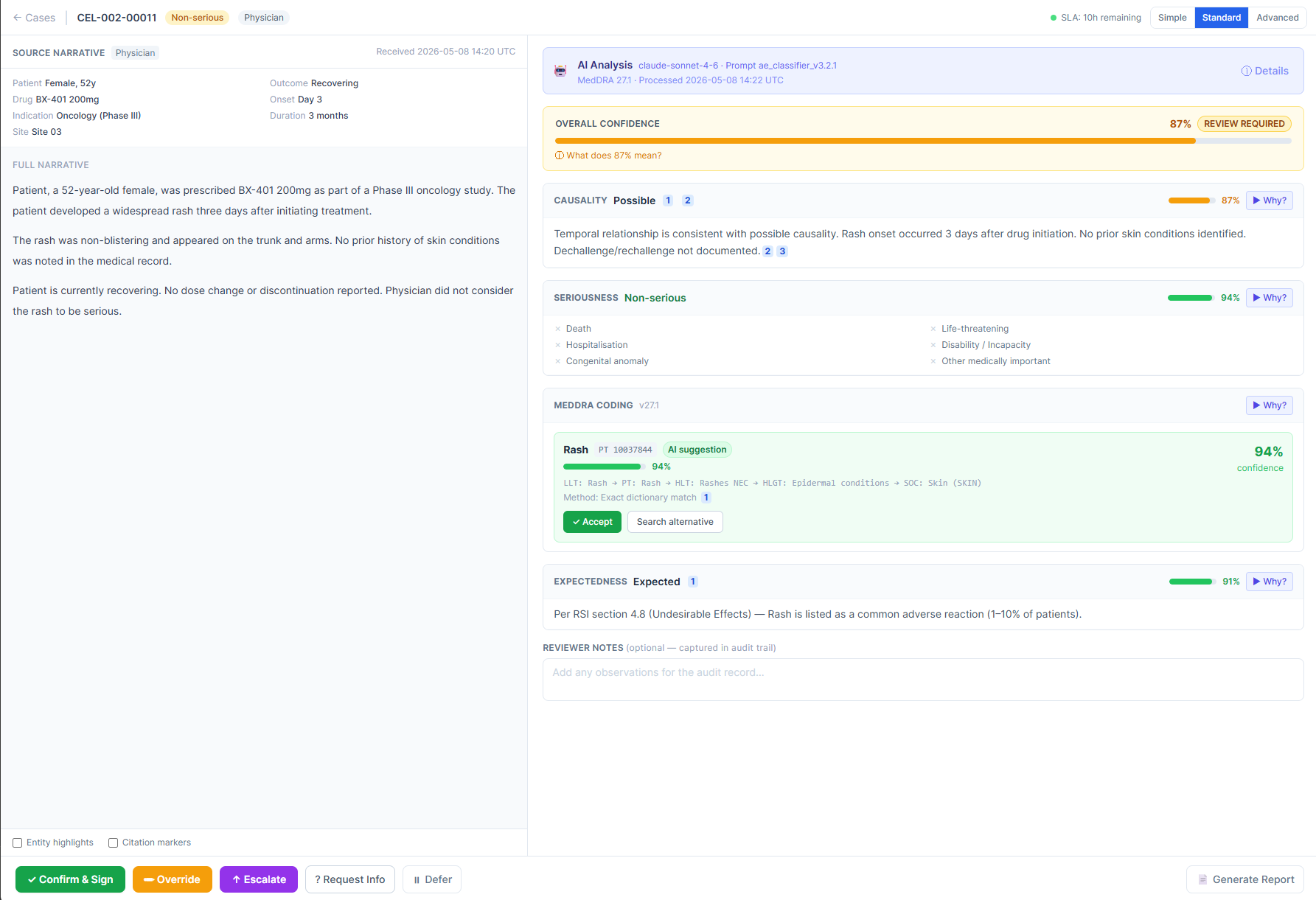
This is a real case in the Workbench today. The AI assembles the analysis, causality, and grade — every line labelled suggested. Nothing becomes a record until a named physician adjudicates and signs.
- ▶ AI analysis with explicit confidence — never auto-filed
- ▶ Causality and expectedness surfaced for the reviewer to confirm or override
- ▶Confirm & Sign — the Part 11-aligned moment the decision binds
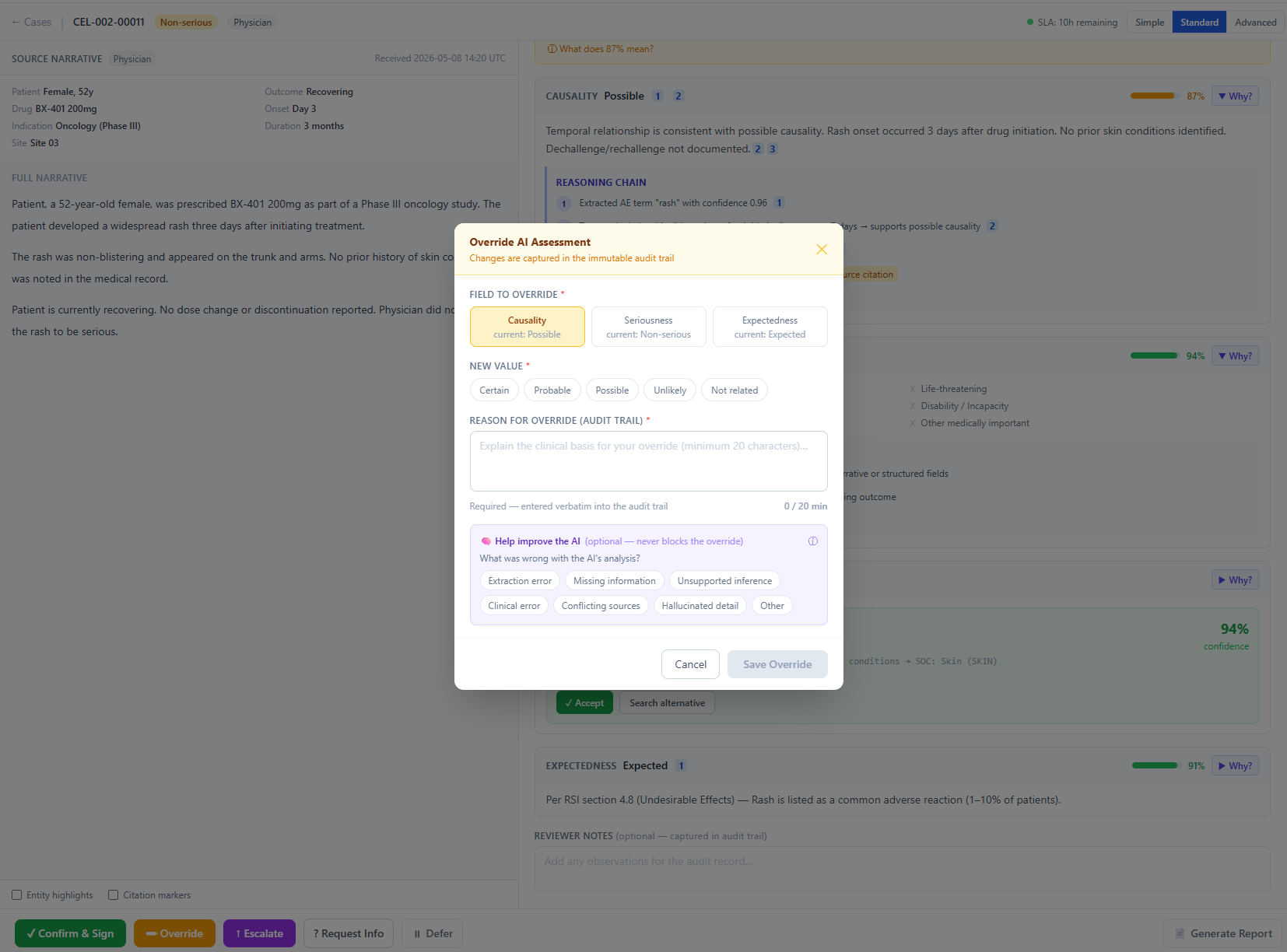
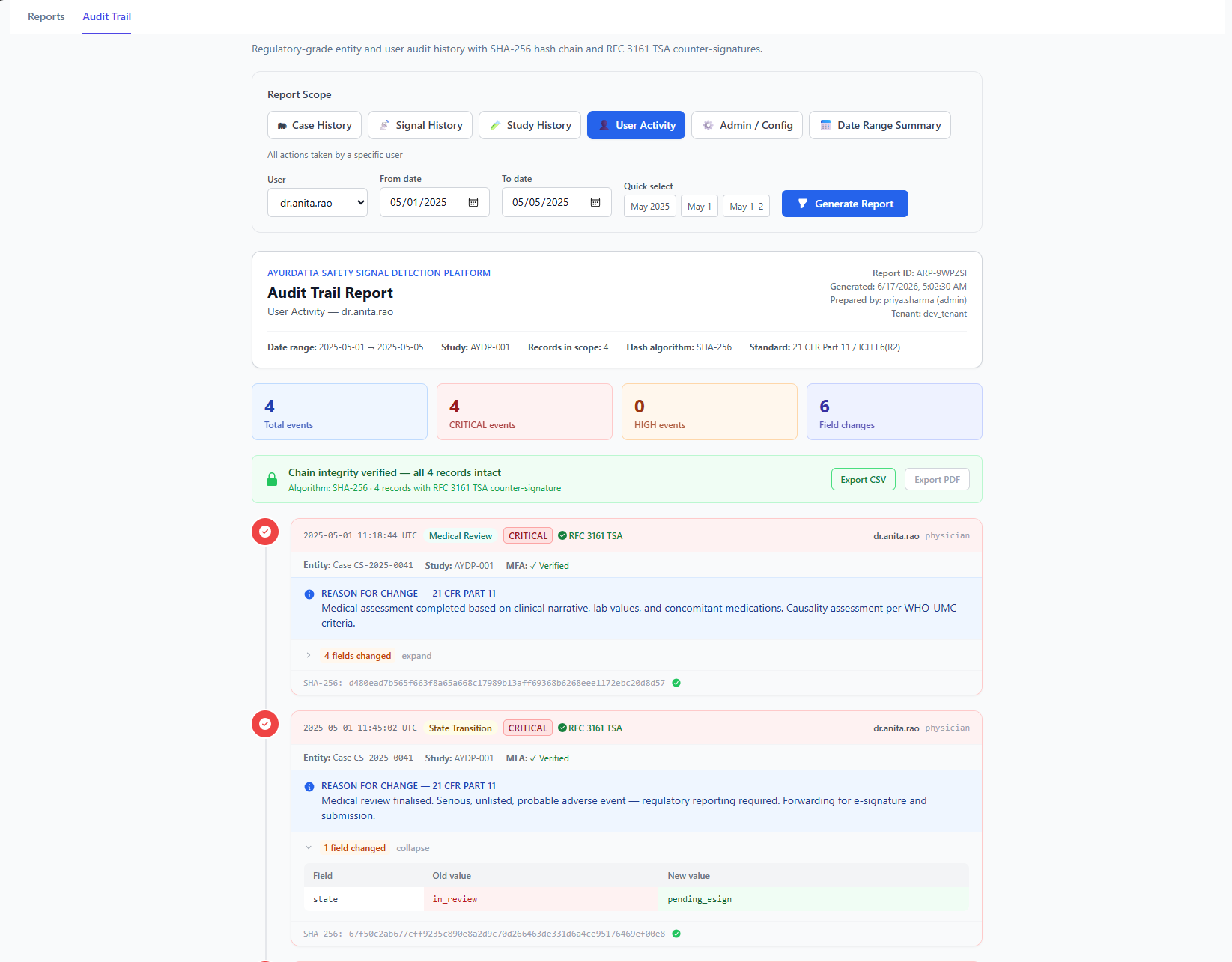
Every decision is the record.
Every physician action — confirmation, override, or rejection — is captured as it happens. No separate logging step. No reconstruction from memory. The trail is the byproduct of doing the work.
A compliant, AI-driven unified platform
The Workbench is the first module of a unified, GxP-validated environment that will bring signal detection, medical oversight, and the documented decision record into one compliant system of record — built on the same architectural invariant: the physician decides, and the trail proves it. It is the natural extension of the industry's first unified eClinical platform, now purpose-built for the RTCT era.
The Workbench — physician oversight beside your existing stack.
Native signal detection and case intake under the same compliant decision layer.
One unified, validated system of record for AI-assisted, real-time clinical safety.
Signal detection, under the same decision layer
The native detection and case-intake modules on the roadmap are further along than "next" suggests. Here they are in progress — disproportionality and trend analytics that feed the same physician-owned, audit-ready sign-off.
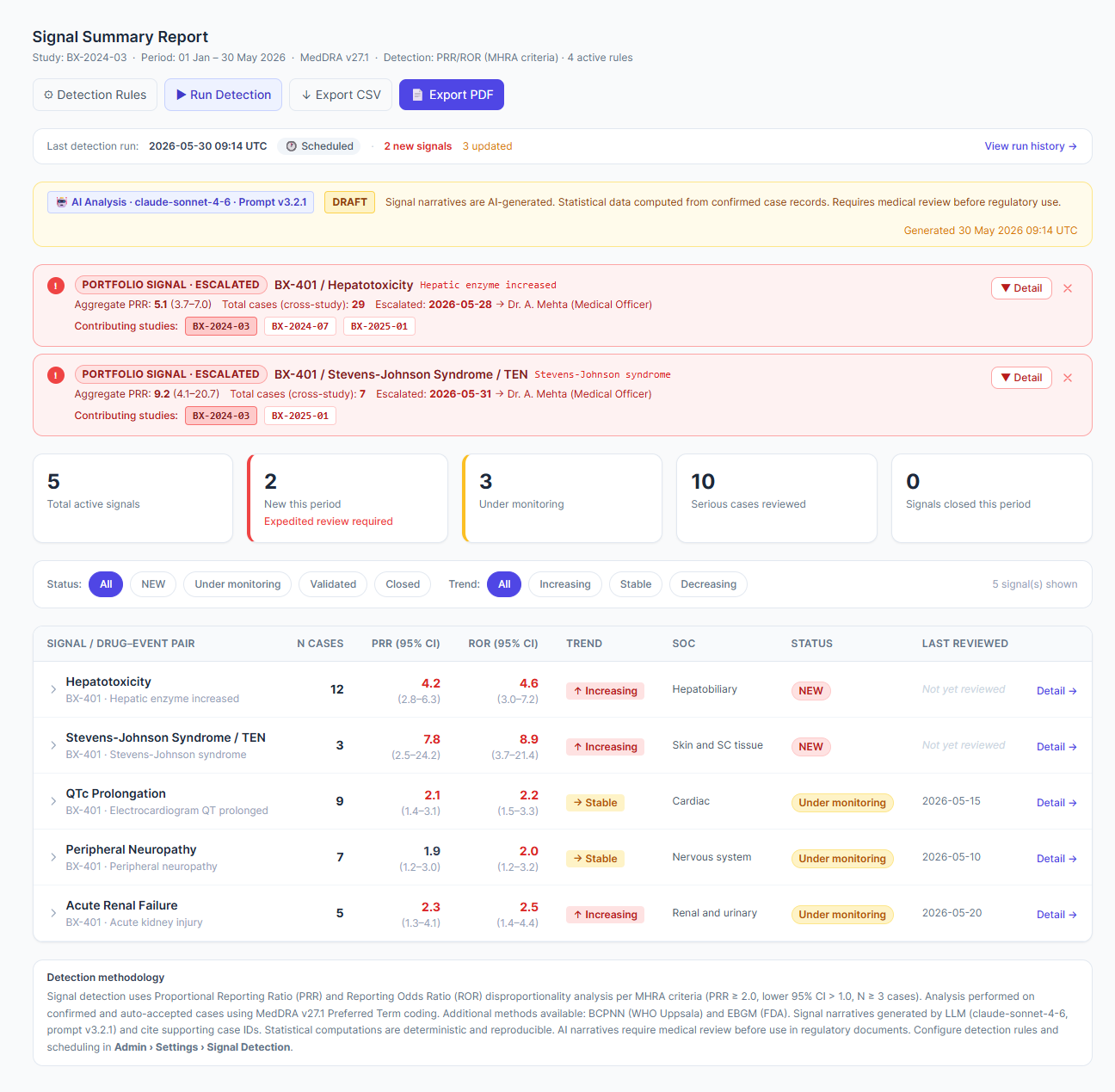
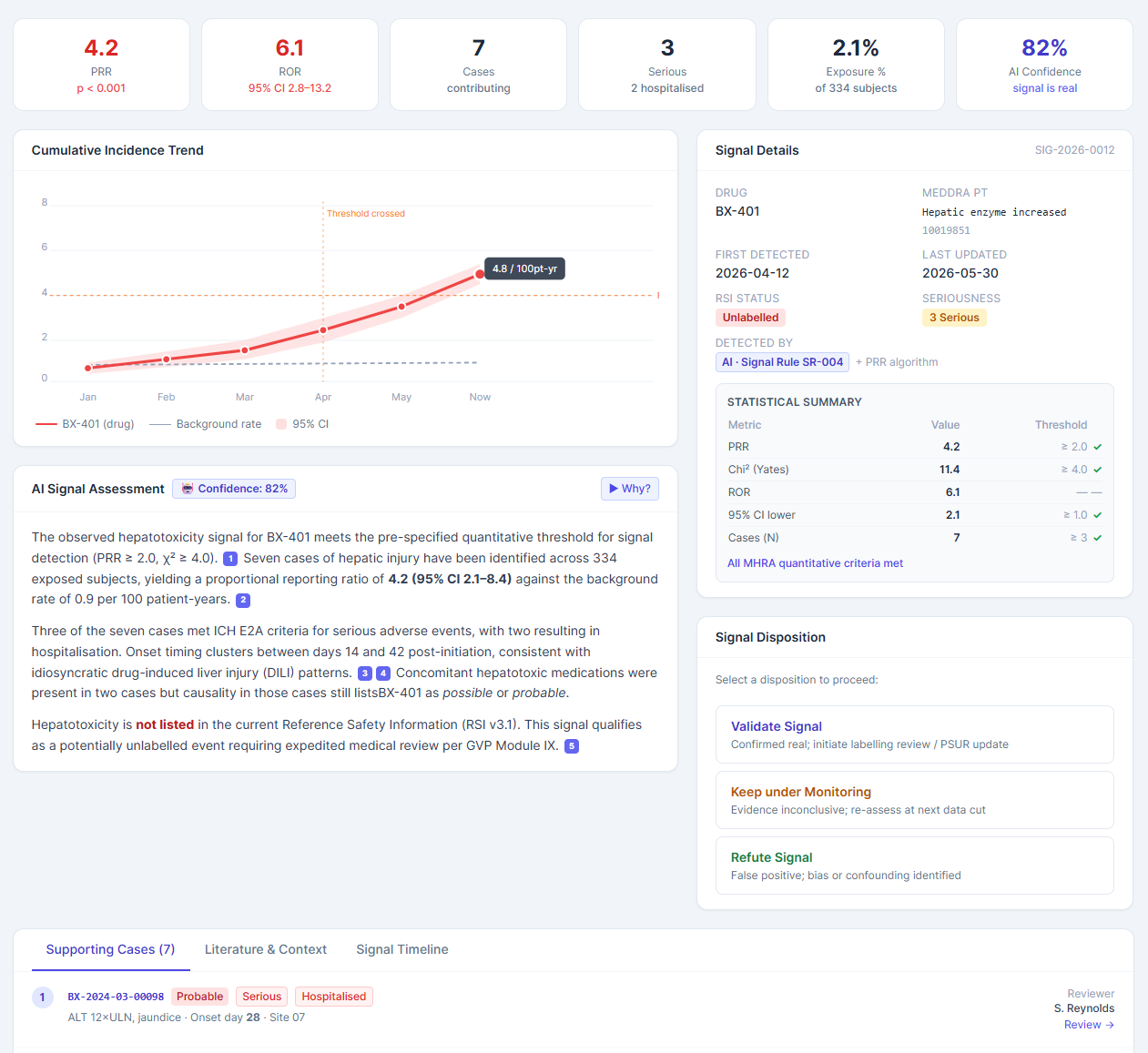
Same invariant, one module earlier: detection assists, the physician still decides, and the trail still proves it.
Eight minutes, end to end.
The fastest way to understand the Workbench is to watch a signal travel from AI flag to signed, audit-ready decision — on a case that looks like your program.
Book a live demo